Little Sister Embroidery Design Review
As an embroidery designer and product reviewer, I’ve evaluated countless machine embroidery designs. Little Sister stands out for its charm and versatility, but it’s not without its nuances. This review is based on real-world use cases, from custom apparel to handmade gifts, and offers practical insights for designers, Etsy sellers, and craft business owners.
The First Impression: A Delightful Design with a Personal Touch
Little Sister immediately evokes a warm, nostalgic feeling. The design features a simple yet expressive figure, likely representing a younger sibling or a childlike character. Its layout is clean, with a balanced composition that makes it ideal for small to medium-sized projects. The level of detail is moderate, focusing on key elements like facial expressions and clothing, which gives it a handmade quality without being overly complex.
This design feels most at home on t-shirts, tote bags, and baby items. It has a playful, approachable vibe that would work well in a nursery, as a personalized gift, or as part of a boutique product line. The theme is straightforward, making it easy to incorporate into various styles without clashing.
Real-World Performance: How Little Sister Stands Up in Embroidery Projects
When I tested Little Sister on different fabrics and project types, it performed well overall. On cotton t-shirts and sweatshirts, the design stitched cleanly with minimal puckering. The stitch density is appropriate for a graphic design, allowing for good coverage without overwhelming the fabric. However, it’s important to note that the design may require careful handling on stretchy or thin materials.
For custom apparel, Little Sister works best when placed on flat areas of the garment. It doesn’t lend itself well to curved surfaces like caps or hoods, where the shape might distort. On tote bags and aprons, the design holds up well, especially when using a proper stabilizer. For baby clothes, the simplicity of the design is a plus—less detail means fewer chances of thread breakage or stitching issues.
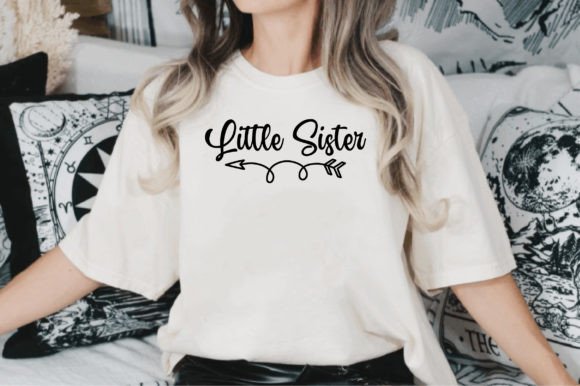
One area where Little Sister shines is in printable mockups and digital product previews. Its clean lines make it easy to visualize on different backgrounds, and it adapts well to both light and dark fabric colors. That said, thread color contrast is crucial. If you’re using a light-colored thread on a dark background, the design may appear washed out unless the stitches are dense enough to show through.
Where to Use Carefully: Potential Challenges with Little Sister
While Little Sister is a solid design, there are some scenarios where it may not perform as expected. Small hoop sizes can be a challenge, especially if the design requires multiple hooping steps. If your embroidery machine has limited space, you may need to adjust the design or split it into sections.
Textured fabrics, such as denim or corduroy, can affect the visibility of the design. The satin stitch and fill stitch used in Little Sister may not lay flat as smoothly as they would on a smooth fabric. Similarly, on thin or stretchy materials, the design could pucker or lose definition. In these cases, using a heavy-weight stabilizer is essential to maintain the integrity of the stitches.
Small details, like the facial features or intricate patterns, may not hold up well on very small scales. If you're planning to use this design for embroidered patches or applique designs, consider whether the details will translate effectively. Tiny lettering or decorative accents might be lost in the process.
Impact on Visual Appeal and Customer Perception
Little Sister adds a personal, handmade touch to any project. When properly executed, it enhances the visual appeal of a finished product, making it more attractive to customers. Its simplicity also helps in creating a cohesive brand identity, especially for small shops or Etsy sellers looking to maintain a consistent aesthetic.
From a customer perspective, this design is highly giftable. It’s easy to recognize, emotionally resonant, and suitable for a wide range of occasions—from birthdays to holidays. It also contributes to a sense of professionalism, especially when used in commercial embroidery projects or as part of a digital product offering.
For craft businesses, Little Sister can be a valuable addition to your design assets. It’s versatile enough to be used in multiple products, from t-shirt designs to holiday gifts. However, it’s important to ensure that the design aligns with your brand’s style and target audience.
Practical Designer Notes: Testing and Preparing for Success
Before using Little Sister in a client project or selling it as a digital product, I recommend testing it on scrap fabric first. This will help you assess how the design looks on different materials and identify any potential issues with stitch density or thread color contrast.
Check the design in black and white mockups to see how it translates without color. Compare it against both light and dark fabric backgrounds to ensure it remains visible and clear. If you plan to use it for commercial purposes, confirm the licensing terms to avoid any legal complications.
Proper stabilizer use is critical, especially on delicate or stretchy fabrics. Also, pay attention to the hoop size and make sure it fits your machine’s capabilities. If the design is too large for your hoop, consider resizing or splitting it into sections.
Finally, always inspect small details before finalizing a project. Even a minor flaw in the stitching can affect the overall quality of the finished product. Whether you're creating a handmade gift or a small shop merchandise item, attention to detail makes all the difference.