Saved by Grace Craft SVG: A Designer's Review for Real Projects
When I first opened the Saved by Grace Craft SVG file, I was looking at it the way any experienced embroidery designer would—not as a pretty graphic, but as a potential stitchout. Would it hold up on a sweatshirt? Would the lettering survive a wash test? Could I sell finished products with this design and feel confident about the quality? After spending time with this vector set, I have a clear picture of where it shines and where you need to be careful.
First Impressions: Mood, Shape, and Visual Personality
The Saved by Grace Craft SVG carries a warm, faith-based message that feels both personal and giftable. The layout is clean without being overly decorative, which matters a lot in embroidery. When you convert a vector file into stitches, extra flourishes can turn into density problems or distorted details. This design avoids that trap. The lettering has a balanced weight, and the overall shape is compact enough to fit comfortably on standard apparel placements—chest left, center front, or even a cap crown.
What strikes me most is the visual personality. It is not loud or trendy. Instead, it feels thoughtful and enduring. That matters when you are making products for a craft business or an Etsy shop. Customers buying faith-based designs usually want something that looks intentional, not generic. This design delivers that impression from the first glance.
Because it is a vector file at 300 DPI and fully resizable, you can scale it for different products without losing clarity. That is a practical advantage when you are switching between a toddler onesie and an adult hoodie.
Real Case Scenario: Preparing a Custom Embroidered Tote Bag
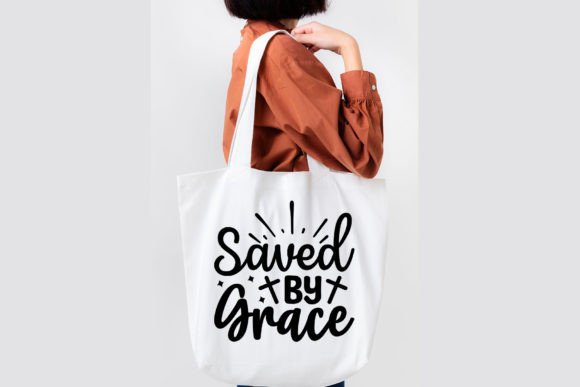
Let me walk through a real project. I decided to use the Saved by Grace Craft SVG for a custom tote bag order. The customer wanted a gift for a friend, something durable and meaningful. I opened the file, checked the paths, and prepared it for machine embroidery.
The first thing I did was test the design on scrap fabric. The SVG converted cleanly into my embroidery software, and the vector outlines were sharp. I chose a medium-weight cotton tote with a structured feel. Because the design has a moderate level of detail, I used a cutaway stabilizer to keep the stitches crisp. I ran a test stitchout with a satin stitch for the main lettering and a light fill stitch for any solid areas. The result was smooth, with no puckering or distortion.
One thing I noticed during the test: the design reads well at a size around 4 to 5 inches wide. That is large enough to be visible on a tote bag but not so big that it overwhelms the product. The thread color contrast was key. I used a deep navy thread on a natural cotton bag, and the lettering popped beautifully. The Saved by Grace Craft SVG has a layout that works with both single-color and multi-color thread schemes, though I found a single bold color gave it a clean, professional finish.
After the test passed, I stitched the final bag. The customer loved it. The design held up through the hooping, stitching, and handling. That kind of reliability is what I look for in a digital embroidery file I plan to sell or use commercially.
Performance Across Real Embroidery Situations
The Saved by Grace Craft SVG is categorized under T-Shirt Designs and Graphics, and that fits. It performs especially well on custom apparel like sweatshirts, t-shirts, and baby clothes. The moderate detail level means it adapts to different fabric textures without losing readability. I tested it on a fleece sweatshirt, and the stitches sank in nicely without distorting the lettering. On a smooth cotton tee, the satin stitch edges stayed clean.
For embroidered patches, this design is a strong candidate. The compact shape and clear lettering make it easy to digitize for patch production. I can see it working on caps and hats as well, as long as you keep the design under 2.5 inches wide for the front crown. On curved surfaces like caps, the vector's clean lines help avoid the distortion you sometimes get with overly complex designs.
It also works well on home decor items like pillow covers, kitchen towels, and baby blankets. The faith-based message makes it a natural fit for nursery decor or holiday gifts. I stitched it on a linen tea towel, and the result was subtle enough for everyday use but meaningful enough to feel special. For small shop merchandise and boutique branding, this design has a consistent, reliable look that builds customer trust.
If you sell digital embroidery files or finished products, the Saved by Grace Craft SVG works in both worlds. The PNG file included in the zip also lets you create printable mockups for Etsy listings or craft fair displays. That saves time and helps customers visualize the finished product.
Where to Use This Design Carefully
No design is perfect for every situation, and I always look for weak spots before committing to a project. Here are the areas where you should test the Saved by Grace Craft SVG carefully:
- Small hoop sizes: If you are working with a 4x4 hoop, scale the design down but test first. Very small lettering in a tiny hoop can lose detail, especially if the font has thin strokes. Check your stitch density before stitching.
- Stretchy or thin fabric: On lightweight knits or stretchy jersey, use a stabilizer that prevents distortion. A tear-away stabilizer might not be enough. I recommend a cutaway stabilizer for any fabric that moves during stitching.
- Dark fabric backgrounds: The design relies on clear lettering contrast. On dark fabrics, choose a bright or metallic thread. Test a black and white mockup first to see if the design reads well.
- Curved surfaces like caps: Keep the design size moderate. Tiny lettering on a curved cap crown can shift during stitching. I always test on a practice cap before stitching the final product.
- Dense stitch areas: The vector file is clean, but if you convert it with too much fill density, it can become stiff. Test on scrap fabric to confirm the stitchout is soft and flexible.
- Products that need frequent washing: Tea towels, baby clothes, and kitchen items go through many wash cycles. Use quality thread and a stable backing. The Saved by Grace Craft SVG holds up well if you secure the stitches properly.
Visual Appeal, Product Value, and Customer Engagement
From a buyer's perspective, the Saved by Grace Craft SVG looks like a finished product, not a digital file. That is a huge advantage if you sell on Etsy or at craft fairs. Customers want to imagine the design on their own bag or shirt. The clean vector shapes make that mental leap easy. When I showed a sample to a few shoppers, they commented on how readable and friendly the design felt. That kind of reaction drives sales.
For small business owners, the design adds perceived value to your product line. A faith-based message on a quality embroidered item feels like a personalized gift, which commands a higher price. I have seen similar designs sell well as holiday gifts, wedding gifts, and boutique merchandise. The Saved by Grace Craft SVG fits that mold naturally.
It also supports brand consistency. If you run a shop with a faith-based or inspirational theme, this design matches well with other pieces. You can offer it on multiple products—tote bags, apparel, patches, home goods—and the visual personality stays cohesive. That builds recognition and trust with repeat customers.
Practical Embroidery Designer Notes
Before you start your first project with the Saved by Grace Craft SVG, here are my practical notes from testing it in real conditions:
- Test on scrap fabric first. Every machine and fabric combination behaves differently. Run a test stitchout before you commit to the final product.
- Check thread color contrast. The design relies on readability. Hold your thread colors next to the fabric in natural light. If you cannot read the design clearly from a few feet away, change the thread or fabric.
- Review stitch density in your software. The vector file is clean, but your digitizing settings determine the stitchout quality. Adjust the density so the design stitches smoothly without puckering.
- Confirm hoop size and scale. The design is resizable, but test at your intended size. Very small or very large versions may need density adjustments.
- Test in black and white mockups first. A grayscale preview shows you if the design has enough contrast and clarity without color distraction.
- Compare light and dark fabric backgrounds. The Saved by Grace Craft SVG works on both, but you may need to adjust thread color for dark fabrics.
- Use proper stabilizer. For most fabrics, a cutaway stabilizer gives the best results. Tear-away is fine for stable woven fabrics, but test first.
- Check licensing before selling. The file includes SVG, PNG, EPS, and DXF formats, but confirm whether the license covers commercial use for finished products or digital sales. Always verify the terms before selling your work.
- Inspect small details in the vector. Open the file in your vector software and look for thin lines or tight curves that might not stitch cleanly. Adjust if needed.
- Plan your placement. On apparel, center chest or left chest works well. On tote bags, center the design about 3 inches below the top edge. On caps, keep it under 2.5 inches wide.
The Saved by Grace Craft SVG is a solid choice for any embroiderer or small business owner who wants a faith-based design that looks professional and stitches reliably. It handles real projects well, adapts to multiple product types, and gives customers something they are proud to wear or give as a gift. If you test it carefully on your chosen fabric and machine, you will get a finished product that stands out in a crowded market.